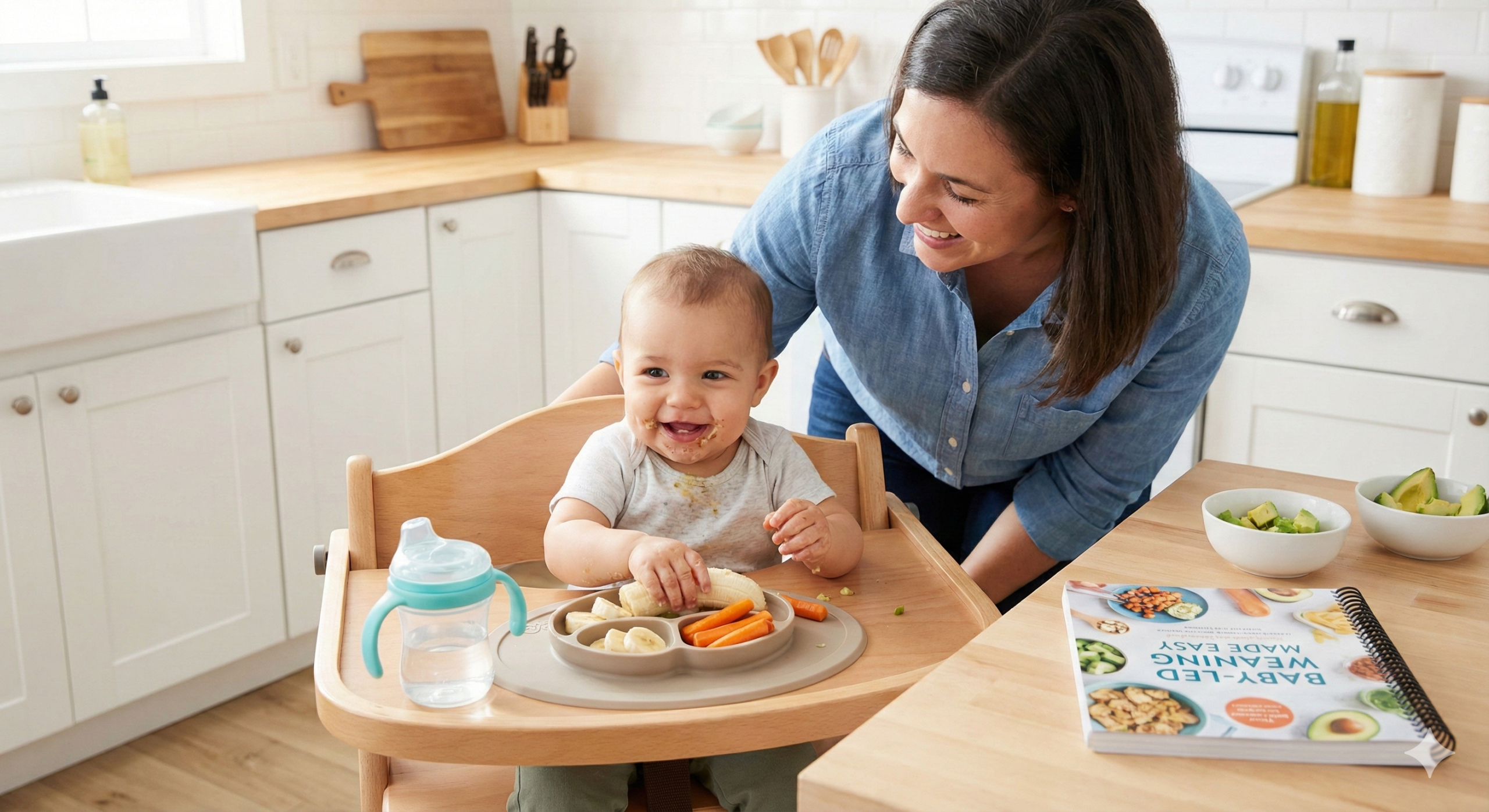
Starting Solid Foods: Your Complete Guide to Baby’s First Foods
Starting Solids: Your Complete Guide to Baby's First Foods
Starting solid foods is an exciting milestone in your baby’s first year. Between managing nutrition, avoiding allergies, and dealing with inevitable messes, introducing solids can feel overwhelming. This comprehensive guide covers everything you need to know about when to start, what foods to offer, feeding methods, and how to make mealtimes positive experiences for both you and your baby.
 When to Start Solid Foods
Most babies are ready to begin solid foods around 6 months of age, though the window can be anywhere from 4-6 months depending on individual development. The specific month matters less than whether your baby shows readiness signs.
Signs of Readiness:
Can sit up with minimal support and hold head steady
Has lost the tongue-thrust reflex (doesn’t automatically push food out)
Shows interest in what others are eating
Can pick up objects and bring them to mouth
Opens mouth when food approaches
Can move food from front to back of mouth
Why Wait Until Around 6 Months:
Digestive system is more developed
Reduced risk of food allergies
Better ability to handle different textures
Improved sitting and motor skills
Still receiving all necessary nutrition from breast milk or formula
Important Note: Breast milk or formula remains your baby’s primary nutrition source until 12 months. Solids are for practice and exploration initially.
Choosing Your Feeding Approach
Two main approaches exist for introducing solids, and many families use a combination of both.
Traditional Spoon-Feeding (Purees):
This method involves offering smooth, pureed foods on a spoon.
Advantages:
Parents control pace and amount
Less messy initially
Can easily track what baby has eaten
May feel more familiar to parents
How to Start:
Begin with single-ingredient, iron-rich foods
Offer 1-2 teaspoons initially
Wait 3-5 days before introducing new foods
Gradually increase thickness of purees
Introduce lumpy textures by 9 months
Good First Purees:
Iron-fortified infant cereal mixed with breast milk or formula
Pureed sweet potato
Pureed avocado
Pureed banana
Pureed peas
Pureed meat (excellent iron source)
Baby-Led Weaning (BLW):
This approach lets babies feed themselves appropriate finger foods from the start.
Advantages:
Promotes self-regulation of appetite
Develops fine motor skills
Encourages exploration of textures
Babies eat what family eats (modified)
How to Start:
Ensure baby can sit independently
Offer soft, appropriately-sized pieces
Let baby explore and self-feed
Expect lots of mess
Never leave baby unattended
Good First BLW Foods:
Thick strips of soft-cooked vegetables
Banana spears
Avocado slices
Strips of very soft meat
Large pieces of soft-cooked pasta
Toast strips with thin spread
Combination Approach:
Many families successfully combine both methods:
Offer purees when convenient or time-limited
Provide finger foods when possible
Follow baby’s lead on preferences
Adjust based on what works for your family
First Foods: What to Offer
Iron-Rich Foods (Priority): By 6 months, babies’ iron stores from birth are depleting. Offer iron-rich foods daily:
Iron-fortified infant cereal
Pureed or soft-cooked meat
Pureed legumes (beans, lentils)
Tofu
Iron-fortified foods
Vegetables: Introduce vegetables early to develop acceptance:
Sweet potato
Butternut squash
Carrots (cooked until very soft)
Green beans
Peas
Broccoli (soft-cooked)
Zucchini
Beets
Cauliflower
Fruits: Offer variety while managing natural sugars:
Banana
Avocado
Apple (cooked until soft or as applesauce)
Pear (cooked until soft)
Peach
Plum
Mango
Berries (mashed or cut appropriately)
Grains: Provide energy and variety:
Iron-fortified infant cereal (rice, oatmeal, barley)
Soft-cooked pasta
Toast strips
Soft rice
Quinoa
Proteins: Essential for growth:
Pureed or shredded chicken
Ground beef
Fish (watch for bones)
Eggs (fully cooked)
Beans and lentils
Tofu
Full-fat yogurt (after 6 months)
Cheese (small amounts)
Fats: Important for brain development:
Avocado
Nut butters (thinly spread, not by the spoonful)
Olive oil drizzled on foods
Full-fat dairy products
Fatty fish
Foods to Avoid in First Year
Choking Hazards: Avoid until proper age/texture:
Whole grapes (cut lengthwise into quarters)
Cherry tomatoes (cut into quarters)
Hard raw vegetables
Whole nuts
Popcorn
Hard candy
Hot dogs (unless cut lengthwise and chopped)
Large chunks of meat or cheese
Chunks of peanut butter
Honey: Never give honey before 12 months due to botulism risk, even cooked into foods.
Cow’s Milk: Don’t offer as a main drink before 12 months (though yogurt and cheese are fine after 6 months).
High-Mercury Fish: Limit or avoid shark, swordfish, king mackerel, and tilefish.
Added Salt and Sugar: Babies don’t need added salt or sugar. Their food should be seasoned with herbs and spices instead.
Low-Fat or Skim Dairy: Babies need full-fat dairy products for proper brain development.
Introducing Allergenic Foods
Current research shows that introducing potential allergens early (around 6 months) may actually reduce allergy risk.
Common Allergens to Introduce:
Peanut products
Tree nuts (as nut butter)
Eggs
Cow’s milk (in cooked foods or yogurt)
Soy
Wheat
Fish
Shellfish
Sesame
How to Introduce:
Offer one new allergenic food at a time
Give small amounts initially (1/4 teaspoon)
Offer at home when you can monitor baby
Offer in morning/afternoon (not before bed)
Wait 2-5 days before introducing next allergen
Mix with familiar food if preferred
For High-Risk Babies: If your baby has severe eczema or existing food allergy, consult your pediatrician before introducing peanuts or other major allergens.
Peanut Introduction:
Thin peanut butter on toast
Peanut puff snacks
Peanut butter mixed into yogurt or applesauce
Never offer whole peanuts (choking hazard)
Meal Planning and Schedule
6-8 Months:
1-2 solid feeding sessions per day
Breast milk or formula: 24-32 oz/day
Solids are practice, not primary nutrition
Offer solids after milk feeding
8-10 Months:
2-3 solid feeding sessions
Breast milk or formula: 24-30 oz/day
Gradually increase amount and variety
Solids can be before or after milk
10-12 Months:
3 meals plus 1-2 snacks
Breast milk or formula: 22-24 oz/day
Solids becoming more important nutritionally
Include baby in family mealtimes
Sample Feeding Schedule (9 Months):
7:00 AM: Breast/bottle
8:00 AM: Breakfast (oatmeal with banana, yogurt)
10:00 AM: Breast/bottle
12:00 PM: Lunch (soft-cooked vegetables, ground meat, avocado)
2:30 PM: Breast/bottle
5:30 PM: Dinner (pasta with sauce, soft-cooked broccoli, cheese)
7:00 PM: Breast/bottle before bed
Managing Mealtimes
Creating Positive Experiences:
Make mealtimes pleasant, not stressful
Sit together at table when possible
Turn off screens/distractions
Let baby see you eating similar foods
Respect baby’s hunger and fullness cues
Never force eating
Dealing with Mess:
Put mat under high chair
Use bibs with pockets
Have cleaning supplies ready
Consider feeding outside when possible
Remember: mess = learning
Preventing Choking:
Always supervise during eating
Ensure baby is seated upright
Offer appropriate textures/sizes
Learn infant CPR
Avoid distractions during meals
Never feed baby while lying down
Signs of Choking vs. Gagging: Gagging is normal and protective:
Makes noise
May cough forcefully
Eyes may water
Will resolve on its own
Choking requires intervention:
Silent or weak/ineffective cough
Can’t cry
Turning blue
Take action immediately
Handling Feeding Challenges
Food Refusal: Very common and normal. Strategies:
Offer 10-15 times before deciding baby doesn’t like it
Try different preparations (cooked, raw, pureed, chunky)
Don’t pressure or force
Model enjoyment of the food
Combine with accepted foods
Picky Eating: Starts in toddlerhood but can begin earlier:
Continue offering variety
Don’t become a short-order cook
Let baby see others eating the food
Keep introducing new foods
Don’t give up after a few rejections
Constipation: Can occur when starting solids:
Offer plenty of water
Include high-fiber foods (prunes, pears, peas)
Reduce constipating foods (bananas, rice cereal)
Contact doctor if persistent
Diarrhea: May occur with new foods:
Can continue solids with mild diarrhea
Offer extra fluids
Reduce fruit juices if given
Contact doctor if severe or persistent
Nutrition Tips
Iron: Essential for brain development:
Offer iron-rich foods daily
Pair with vitamin C foods (enhances absorption)
Continue iron-fortified formula or breast milk
Vitamin D: Breastfed babies need supplement (400 IU daily):
Formula-fed babies usually get enough
Continue supplement through first year
Water: After 6 months:
Offer small amounts with meals
Not needed to replace breast milk/formula
More important as solids increase
Zinc: Important for immune function:
Found in meat, beans, fortified cereals
Breastfed babies may need more
Feeding Equipment
Essential Items:
High chair with secure straps
Bibs (multiple)
Soft-tipped spoons
Small bowls (suction optional)
Sippy cup or open cup
Floor mat
Storage containers
High Chair Selection: Look for:
Easy to clean
Stable and sturdy
Adjustable height
Removable tray
Grows with baby (optional)
Sippy Cups:
Introduce around 6 months
Open cups teach drinking skills
Straw cups are good transition
Avoid prolonged use of spouted cups
Meal Ideas by Age
6-7 Months:
Breakfast: Iron-fortified oatmeal with mashed banana
Lunch: Pureed sweet potato and chicken
Dinner: Mashed avocado and soft-cooked green beans
8-9 Months:
Breakfast: Scrambled egg and toast fingers
Lunch: Ground beef with mashed carrots and potato
Dinner: Soft pasta with meat sauce and broccoli
10-12 Months:
Breakfast: Yogurt with berries and toast
Lunch: Quesadilla pieces with black beans
Dinner: Small meatballs, rice, and steamed vegetables
Special Dietary Considerations
Vegetarian/Vegan: Ensure adequate:
Iron (fortified cereals, beans, lentils, tofu)
Vitamin B12 (supplement may be needed)
Zinc (beans, fortified cereals)
Protein variety (combine different sources)
Food Allergies: If allergy develops:
Eliminate allergen completely
Read all labels carefully
Consult pediatric allergist
Learn about hidden sources
Consider nutritional substitutes
When to Consult Your Pediatrician
Contact your doctor if:
Baby refuses all foods consistently
Not gaining weight appropriately
Shows signs of food allergy (hives, difficulty breathing, vomiting)
Has severe constipation or diarrhea
Chokes frequently
Shows no interest in solids by 7-8 months
Final Thoughts
Starting solids is a significant milestone filled with excitement, mess, and learning. Remember that every baby is different—some take to solids immediately while others need more time. Your job is to offer nutritious options and let your baby explore at their own pace.
Stay patient, flexible, and positive. Those messy faces and rejected foods are all part of the journey. Before you know it, your baby will be eating everything the family eats, and these early days of first foods will be fond memories.
Sources:
American Academy of Pediatrics (AAP) Infant Feeding Guidelines
World Health Organization (WHO) Complementary Feeding Guidelines