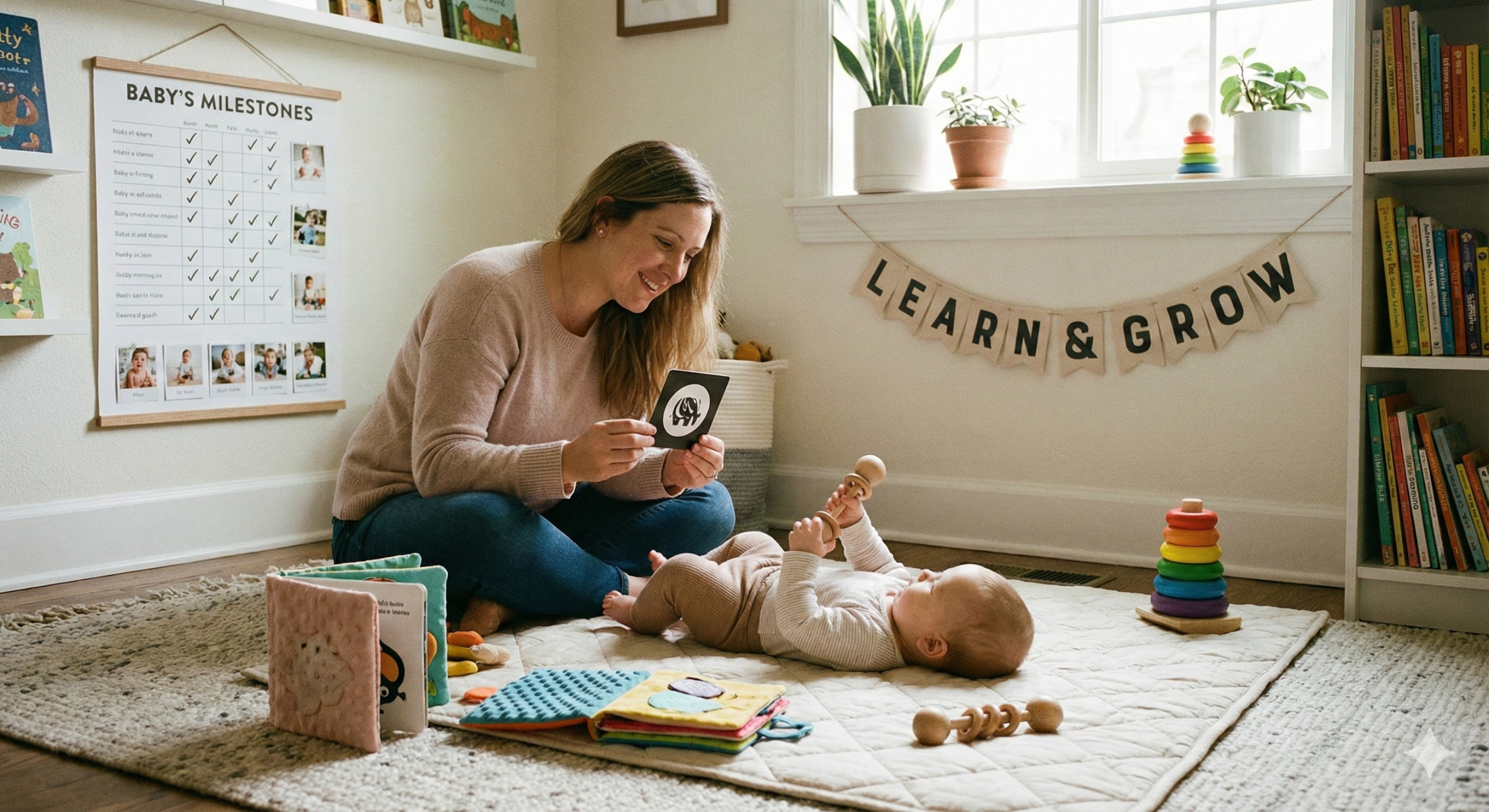
Baby’s First Year Developmental Milestones: A Month-by-Month Guide
Baby's First Year Developmental Milestones: A Month-by-Month Guide
Your baby’s first year is an incredible journey of growth and development. From a newborn who can barely lift their head to a curious one-year-old taking their first steps, the transformations are remarkable. Understanding what to expect each month helps you support your baby’s developmental milestones while recognizing that every child grows at their own pace. This comprehensive guide walks you through typical milestones and provides activities to encourage your baby’s growth.
Understanding Developmental Milestones
Before diving into month-by-month expectations, it’s important to understand what developmental milestones are and aren’t.
What They Are:
- General guidelines for when most babies achieve certain skills
- Indicators of healthy development across multiple domains
- Tools healthcare providers use to identify potential delays
What They Aren’t:
- Rigid deadlines your baby must meet
- Competitions between babies
- Indicators of future intelligence or success
Remember: the ranges provided represent when most babies achieve milestones. Some perfectly healthy babies will develop earlier or later than these windows.
Month 1: The Newborn Phase
Your newborn is adjusting to life outside the womb, and most of their time is spent sleeping and eating.
Physical Development:
- Reflexes dominate movement (sucking, rooting, startle, grasping)
- Can lift head briefly when on stomach
- Hands mostly stay in fists
- Eyes can focus 8-12 inches away (perfect for seeing caregiver’s face during feeding)
Cognitive Development:
- Recognizes parent’s voice
- Prefers human faces to objects
- Begins to track objects briefly with eyes
- Shows preference for high-contrast patterns
Social-Emotional Development:
- Begins to settle when held or hearing familiar voices
- May briefly make eye contact
- Cries to communicate needs
Activities to Support Development:
- Practice tummy time for 3-5 minutes several times daily
- Talk and sing to your baby frequently
- Provide high-contrast black and white images
- Make eye contact during feeding and diaper changes
- Respond consistently to cries
Month 2: Becoming More Alert
Around 6-8 weeks, many babies start becoming more interactive and alert during wakeful periods.
Physical Development:
- Holds head up longer during tummy time
- Smoother arm and leg movements
- Opens and closes hands more frequently
- Begins to swipe at objects
Cognitive Development:
- Tracks moving objects with eyes
- Recognizes familiar faces and objects
- Shows more interest in surroundings
- Begins to coordinate hand-eye movements
Social-Emotional Development:
- First social smiles emerge (around 6 weeks)
- Coos and makes gurgling sounds
- Calms when spoken to or held
- Shows different cries for different needs
Activities to Support Development:
- Continue tummy time, gradually increasing duration
- Provide toys with different textures to touch
- Respond to smiles and coos with your own
- Read simple board books together
- Take short walks to provide new visual experiences
Month 3: Growing Strength
The third month brings increased head control and the beginning of intentional movements.
Physical Development:
- Good head control when supported in sitting position
- Can prop up on forearms during tummy time
- Brings hands to mouth
- Grasps and shakes toys
- May roll from tummy to back
Cognitive Development:
- Recognizes familiar faces from distance
- Shows anticipation (gets excited before feeding)
- Follows objects 180 degrees with eyes
- Uses hands and eyes together
Social-Emotional Development:
- Frequent smiling and cooing
- Enjoys playing with others
- May cry when play stops
- Shows different emotional responses
Activities to Support Development:
- Offer toys that rattle or make sounds when moved
- Practice “conversations” by pausing after you speak
- Introduce crinkly books and soft toys
- Place toys within reach during tummy time
- Use baby gym with hanging toys
Month 4: Increased Interaction
Four-month-olds are delightful—they’re engaged, responsive, and starting to show their personalities.
Physical Development:
- Steady head control in all positions
- Pushes up on straight arms during tummy time
- Rolls from tummy to back consistently
- Reaches for and grasps objects
- Brings objects to mouth
Cognitive Development:
- Responds to affection
- Recognizes familiar people from distance
- Shows interest in mirror images
- Anticipates routine activities
Social-Emotional Development:
- Laughs out loud
- Enjoys playing and may cry when play stops
- Copies facial expressions
- Responds to emotion in your voice
Activities to Support Development:
- Provide variety of safe textures to explore with hands and mouth
- Play peek-a-boo
- Offer teething toys
- Read books with simple pictures and textures
- Encourage reaching by holding toys slightly out of reach
Month 5: Rolling and Reaching
Five months brings increased mobility and curiosity about the world.
Physical Development:
- Rolls both directions
- Sits with support
- May rock on hands and knees
- Transfers objects between hands
- Reaches accurately for objects
Cognitive Development:
- Shows curiosity about surroundings
- Tries to get objects out of reach
- Recognizes own name
- Distinguishes between familiar and unfamiliar people
Social-Emotional Development:
- Shows joy and displeasure clearly
- May show stranger anxiety beginning
- Responds to other babies
- Likes to look at self in mirror
Activities to Support Development:
- Create safe floor space for rolling practice
- Offer toys that require two-handed play
- Play simple games like “How big is baby? So big!”
- Introduce sippy cup with water
- Provide opportunities to interact with other babies
Month 6: Sitting Up
Half a year old! Many babies can sit independently, opening new possibilities for play and exploration.
Physical Development:
- Sits without support briefly
- May begin rocking on hands and knees
- Supports weight on legs when held standing
- Develops pincer grasp (thumb and finger)
- Passes objects from hand to hand
Cognitive Development:
- Looks for dropped objects
- Responds to sounds by making sounds
- Begins to understand cause and effect
- Shows curiosity and tries to get objects
Social-Emotional Development:
- Recognizes familiar faces
- Likes to play with others, especially parents
- Responds to emotions
- May show anxiety around strangers
Activities to Support Development:
- Place toys just out of reach to encourage movement
- Play with nesting cups and stacking rings
- Introduce simple solid foods (purees)
- Read board books together
- Play interactive games like pat-a-cake
Important Note: This is typically when introducing solid foods begins, though milk remains the primary nutrition source.
Month 7: Pre-Crawling Mobility
Seven-month-olds are working hard on mobility skills, though the timing of crawling varies widely.
Physical Development:
- Sits well without support
- Bears weight on legs when supported
- May scoot, army crawl, or rock on hands and knees
- Develops better hand coordination
- May start pulling to stand with help
Cognitive Development:
- Finds partially hidden objects
- Explores objects in many ways (shaking, banging, dropping)
- Responds to simple words like “no”
- Shows interest in picture books
Social-Emotional Development:
- Shows clear preferences for familiar people
- Stranger anxiety may intensify
- Enjoys interactive play
- Tests parental responses to actions
Activities to Support Development:
- Baby-proof your home as mobility increases
- Provide variety of safe household objects to explore
- Play hiding games with toys
- Respond consistently to boundary-testing
- Encourage pulling to stand with supervision
Month 8: On the Move
Most babies are mobile by 8 months, whether crawling, scooting, or rolling to get around.
Physical Development:
- Crawls (though style varies widely)
- Pulls to standing position
- Sits confidently and plays with toys
- Good pincer grasp for small objects
- May “cruise” along furniture
Cognitive Development:
- Understands object permanence
- Looks for dropped objects
- Points at objects
- Recognizes familiar words
Social-Emotional Development:
- May be clingy and anxious with strangers
- Prefers certain people and toys
- Tests parental responses
- Enjoys games and repeating sounds
Activities to Support Development:
- Create safe exploration spaces
- Play peekaboo and hiding games
- Offer toys that nest, stack, or fit together
- Read simple stories daily
- Introduce finger foods for self-feeding practice
Month 9: Exploring Everything
Nine-month-olds are curious explorers, investigating everything within reach.
Physical Development:
- Crawls well in various directions
- Pulls up to standing confidently
- Cruises along furniture
- Good pincer grasp for small objects
- May stand momentarily without support
Cognitive Development:
- Understands simple commands
- Uses fingers to point
- Looks at correct picture when named
- Imitates gestures and sounds
Social-Emotional Development:
- Shows clear preferences for people and toys
- May have favorite comfort object
- Tests limits and watches for reactions
- Shows fear in some situations
Activities to Support Development:
- Provide push toys for walking practice
- Play simple cause-effect games
- Read books and name objects
- Encourage self-feeding
- Create obstacle courses with cushions
Month 10: Communication Grows
Ten months brings increased understanding and more sophisticated communication attempts.
Physical Development:
- May take first independent steps
- Cruises confidently
- Stands alone briefly
- Refined pincer grasp
- May start using objects correctly (brush, phone)
Cognitive Development:
- Understands simple instructions
- Tests objects in different ways
- Finds hidden objects easily
- Shows understanding of object properties
Social-Emotional Development:
- May show separation anxiety
- Hands you objects to share
- Shows affection to familiar people
- Responds to simple requests
Activities to Support Development:
- Offer push and pull toys
- Play with shape sorters
- Encourage waving and clapping
- Practice two-way “conversations”
- Allow exploration of safe cabinets
Month 11: Almost Walking
Eleven-month-olds are working hard on walking skills, though timing varies greatly between babies.
Physical Development:
- May take first steps or walk independently
- Cruises skillfully
- Stands independently
- Drinks from cup with help
- Stacks objects
Cognitive Development:
- Uses objects correctly (cup, brush, phone)
- Follows simple instructions
- Imitates actions
- Points to get attention or ask for things
Social-Emotional Development:
- Shows clear preferences
- Tests boundaries repeatedly
- May be clingy or show anxiety
- Understands simple words
Activities to Support Development:
- Provide opportunities for supported walking
- Offer toys that encourage problem-solving
- Read interactive books together
- Practice with simple puzzles
- Encourage independence in feeding
Month 12: First Birthday!
Your baby is now a toddler, ready to explore the world on two feet.
Physical Development:
- May walk independently
- Stands from sitting without support
- Drinks from cup
- Uses spoon with help
- Throws ball
Cognitive Development:
- Recognizes many words
- Follows simple commands
- Understands object permanence completely
- Shows problem-solving skills
Social-Emotional Development:
- Shows affection openly
- May have separation anxiety
- Tests limits constantly
- Shows preferences clearly
Activities to Support Development:
- Encourage independent play
- Provide age-appropriate puzzles
- Read together daily
- Allow self-feeding practice
- Create safe spaces for active play
When to Consult Your Pediatrician
While development varies, consult your doctor if your baby:
- Doesn’t respond to loud sounds
- Doesn’t watch objects move by 3-4 months
- Doesn’t smile by 3 months
- Can’t sit without support by 9 months
- Doesn’t babble by 9 months
- Doesn’t respond to their name by 9 months
- Loses skills they once had
Supporting Your Baby’s Development
What Helps:
- Responsive caregiving
- Talking, reading, singing daily
- Safe spaces to explore
- Age-appropriate toys
- Limiting screen time
- Consistent sleep routines
- Regular health checkups
What Doesn’t Help:
- Comparing to other babies
- Pressuring to reach milestones
- Over-scheduling activities
- Excessive screen time
- Lack of interaction
Final Thoughts
Your baby’s first year is filled with incredible growth and development. While milestones provide helpful guides, remember that every baby develops at their own pace. Your role is to provide a safe, nurturing environment where your baby can explore and grow. Celebrate each new skill while enjoying the unique person your baby is becoming.
Sources:
- Centers for Disease Control and Prevention (CDC) Developmental Milestones
- American Academy of Pediatrics (AAP)
- Mayo Clinic Child Development Guidelines