New Born: 0-3 Months
Gentle support, practical tips, and helpful resources for the first months with your baby. Everything you need to nurture your newborn care, thoughtful deals and savings without the premium price tag.


Bringing Baby Home
Bringing your baby home sounds beautiful when people talk about it before birth. The tiny outfit. The car seat. The first photo at the door. The quiet little bundle finally in your arms.
Then real life begins.
You may walk into your home and suddenly wonder if it is warm enough, quiet enough, clean enough, stocked enough, safe enough. You may look at your baby and think, “Now what?” You may feel overwhelmed by love one minute and completely unsure the next.
That is not failure. That is the beginning.
The first few days are not only about the baby adjusting to a new home. They are also about you adjusting to a completely new version of your life. Your baby is learning light, sound, touch, feeding, sleep, clothing, temperature, and comfort. You are learning their face, their cry, their little stretches, their hungry cues, and the strange new rhythm of days and nights blending together.
You do not need to become an expert overnight. You just need a gentle place to begin.
The First Outfit
The newborn bring home outfit does not need to be fancy. It needs to be soft, practical, and comfortable for your baby.
Canadian weather can change quickly, so think in layers. A cotton sleeper, a soft hat when needed, warm socks or built-in footies, and a weather-appropriate blanket for the car ride are usually enough. Avoid anything stiff, scratchy, tight, or hard to remove during diaper changes.
This first outfit may feel emotional because it marks the moment your baby enters the world outside the hospital or birth centre. But your baby does not care about perfection. Your baby cares about warmth, comfort, and being close to you.
That is enough.
The first three months
The first three months are often called the fourth trimester because your newborn still needs a womb-like sense of closeness, warmth, feeding, and reassurance.
If your baby wants to be held constantly, that does not mean you are spoiling them. If they wake soon after being placed down, that does not mean you are doing something wrong. If feeding feels constant, that does not mean you are already behind.
This stage is tender, repetitive, and sometimes exhausting. The goal is not to “fix” your newborn. The goal is to support them while they slowly adjust.
Good newborn care starts with simple rhythms: feed, change, soothe, sleep, repeat. Some days will feel peaceful. Some days will feel like you are doing the same three things over and over with no clear progress. That is normal newborn life.
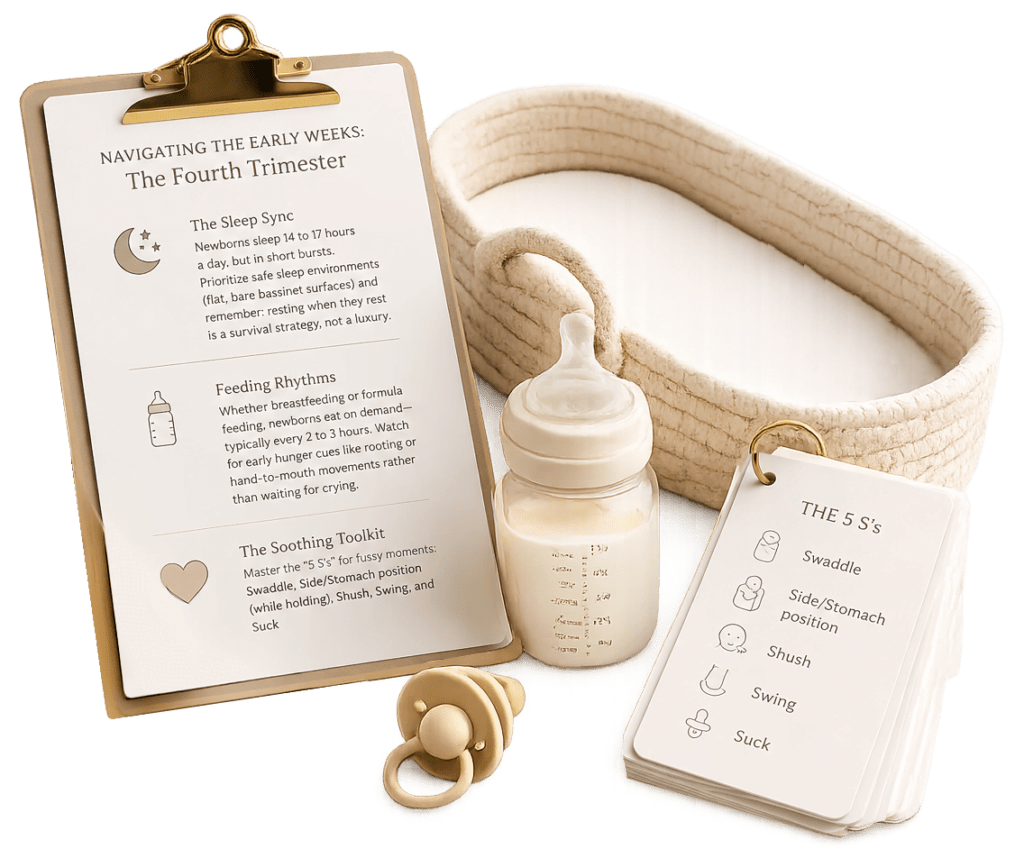
The Sleep Sync:
Newborn sleep is not neat. It comes in short stretches, tiny naps, surprise wake-ups, and nights where everyone seems confused about what time it is.
Your baby may sleep often, but they may not sleep when you hoped they would. They may settle beautifully in your arms and wake the second they touch the bassinet. They may seem wide awake right when you are desperate for rest.
One of the most honest tips for new parents is this, stop treating rest like something you earn after everything else is done. In the newborn stage, rest is care.
Keep sleep spaces simple and safe. Place your baby on their back on a firm, flat surface with no loose blankets, pillows, bumpers, or stuffed toys. Keep nighttime feeds calm and quiet. During the day, let natural light and gentle household sounds help your baby slowly learn the difference between day and night.
You may not get a perfect routine right away. That is okay. You are building one small pattern at a time.
Feeding Rhythms:
Feeding can feel emotional, especially in the beginning. Whether you are breastfeeding, formula feeding, pumping, combo feeding, or still figuring it out, your baby needs nourishment and you need support.
Newborns usually feed often. Some feeds are long. Some are short. Some feel calm. Some feel messy, tearful, or confusing.
Look for early hunger cues like rooting, sucking on hands, turning toward the breast or bottle, or becoming more alert. Crying can be a late hunger sign, so catching the early cues can make feeding feel easier.
If feeding hurts, feels impossible, or leaves you anxious every time, ask for help. A doctor, midwife, lactation consultant, public health nurse, or newborn care specialist can help you understand what is happening and what to try next.
Needing support does not mean you are not made for this. It means you are learning something new with a very tiny person depending on you.
The Soothing Toolkit:
Some babies fuss in the evening. Some cry during diaper changes. Some hate being put down. Some need more help settling into sleep.
Soothing can look like swaddling when safe, gentle rocking, shushing, skin-to-skin, a pacifier, a slow walk around the room, or simply holding your baby close while they work through the moment.
You are not “doing nothing” when you comfort your baby. You are teaching their nervous system that the world is safe.
Keeping Baby Comfortable at Home
A newborn does not need a perfect nursery to feel secure. They need closeness, clean diapers, safe sleep, gentle feeding, warmth, and calm care.
Skin-to-Skin Contact:
Skin-to-skin can be one of the simplest ways to settle your baby. Place your baby against your chest, cover them with a light blanket if needed, and let them feel your warmth and heartbeat.
This can help your baby feel calm and connected. It can also help you slow down in the middle of a day that feels too full.
The Diapering Blueprint:
Newborns go through a lot of diapers. More than you expect. Sometimes right after you just changed them.
Keep diapers, wipes, cream, and extra clothes close by so you are not searching for supplies while holding a crying baby.
Bathing and Cord Care:
Your baby does not need a full bath every day. In the early days, sponge baths are usually enough until the umbilical cord stump falls off and the area heals.
Keep the cord area clean and dry. Avoid pulling at it, even if it looks almost ready to fall off.

Physical Care Essentials
It is natural to wonder if your baby is doing enough.
Tracking weekly can be helpful, but it should not become a scoreboard. Babies grow at their own pace, and small differences are common.
Week 1:
Your baby is adjusting to feeding, sleeping, warmth, diaper changes, and being outside the womb. Most of their time is spent eating, sleeping, and being held.
Week 2:
You may notice more alert moments. Feeding may still feel constant. You may also start feeling the emotional and physical weight of recovery more deeply.
Week 3:
Some babies become fussier around this time. Gas, cluster feeding, evening crying, and overstimulation can show up. Slow down where you can. Your baby may need comfort more than a perfect schedule.
Week 4:
Your baby may begin focusing on your face, responding to your voice, or showing little patterns in feeding and sleep. You may begin to understand some cries more clearly.
Weeks 5–8:
You may see more eye contact, tiny sounds, early smiles, and longer awake windows. Short, supervised tummy time while your baby is awake can help build strength.
Weeks 9–12:
Your baby may show stronger head control, more interest in faces, and more predictable periods of alertness. Sleep may still be uneven, and that does not mean anything is wrong.
Milestones are there to guide you, not scare you. If something feels concerning, speak with your healthcare provider.

Newborn Essentials
There is a lot of pressure on new parents to buy more. More gear, more gadgets, more “must-haves,” more backup items, more things that promise better sleep, calmer feeds, or easier days.
But most new born baby essentials are simple.
You do not need everything at once. Start with what supports feeding, sleeping, changing, bathing, warmth, safety, and comfort.
The best newborn setup is not the most expensive one. It is the one that makes daily care feel a little easier.
Emotional Care for Parents
A healthy baby needs a supported parent.
The early weeks can bring joy, fear, love, frustration, guilt, tears, and exhaustion all in the same day. You can be deeply grateful for your baby and still feel completely overstimulated. You can love motherhood or parenthood and still miss parts of your old life. You can be doing well and still need a break.
That does not make you ungrateful. It makes you human.
Baby blues, tearfulness, mood changes, and anxiety can happen after birth. But if the feelings become intense, frightening, heavy, or last longer than expected, reach out to your healthcare provider.
Your recovery matters too. Your meals matter. Your sleep matters. Your body matters. Your mind matters.

Newborn Essentials Checklist
The everyday basics that help the first weeks at home feel a little calmer and more prepared.
Diapers & Wipes
Feeding Supplies
Safe Sleep Setup
Clothing Basics
Prepare Postpartum Recovery Items
Baby Care Items
Swaddles or Sleep Sacks
Burp Cloths
Thermometer & Basic Care Items
Postpartum Parent Essentials
What Parents Often Wonder About
Quick, reassuring answers to the questions that come up most in the first few months.
How often newborns feed
Many newborns feed often, day and night. Patterns vary from baby to baby and change as they grow.
How many diapers to expect
Expect plenty of changes in the early weeks. Your healthcare provider can share what’s typical for your baby.
Why sleep feels unpredictable
Short sleep stretches and frequent waking are common. Newborn sleep often shifts from one day to the next.
When to contact a healthcare provider
Trust your instincts. If something doesn’t feel right, reach out. No question is too small.
How to ask for support
Be specific: a meal, a load of laundry, or an hour of rest. People often want to help but need direction.
How to manage visitors
It’s okay to set visiting times, keep visits short, or ask guests to lend a hand while they’re there.
Every baby is different. Contact your healthcare provider if you have concerns about feeding, sleep, diapers, jaundice, fever, breathing, or your baby’s overall health.
Support for Parents Too
Caring for a newborn is a big change for your body, your sleep, and your heart. Whatever you’re feeling right now is valid, and looking after yourself is part of looking after your baby.
If you feel persistently overwhelmed, anxious, sad, or unlike yourself, reach out to your healthcare provider or a trusted support professional.
Postpartum Recovery
Give your body time to heal and follow the guidance of your care provider.
Sleep Disruption
Rest when you can and let go of what can wait for another day.
Emotional Adjustment
Ups and downs are common as your family finds its new rhythm.
Feeding Support
Lactation consultants, nurses, and midwives are there to help.
Asking for Help
Friends and family often want to help. Let them know how.
Sharing Responsibilities
Split night feeds, chores, and errands where possible.
Enter Our Monthly Baby Essentials Giveaway
Each month, we curate trusted baby brands and must-have essentials for one lucky Canadian family. Register today to enter and unlock exclusive brand offers.
Support That Fits
Family Life

Helping You Feel More Prepared
Parenting can feel overwhelming when every answer sounds different. Discover baby freebies, trusted products, coupons, giveaways, and resources designed for families.
Explore articles on pregnancy, baby care, milestones, products, routines, and everyday family life, with practical tips for every stage.
- Baby Freebies : Every little thing matters, freebies, rewards & samples that make everyday family needs a little easier.
- Parenting Resources: Parenting brings love, worry, and questions. Find gentle resources and advice to help you feel less alone now.
- Trusted Partners: Meet caring brands with helpful products, services, and offers made for family-friendly deals.
- Daily Support: Baby freebies, parenting resources, trusted products, savings, giveaways, and practical help for everyday parenting.
Frequently Asked
Questions
Trusted parenting insights, product recommendations, and family advice all in one place.
How often should my newborn feed?
How many diapers should a newborn have each day?
Is it normal for newborn sleep to feel unpredictable?
What newborn essentials should I have at home?
Can I enter baby giveaways with a newborn?
When should I contact a healthcare provider?
Built Around Parenthood

First Trimester Checklist

Canadian Baby Registry

Healthy Pregnancy Signs

Hospital Bag Checklist Canada

Best Baby Foods Canada 2026

Baby Freebies and Coupons Canada
The MyBellaBaby Family
A growing community of parents, caregivers, and families connected through helpful offers, resources, and giveaway opportunities.