Creating Your Perfect Birth Environment: A Complete Guide to Setting the Mood for Labor
Understanding the Importance of Your Birth Environment
The environment where you give birth can significantly impact your labor experience. While you may not have complete control over every aspect of your birthing space, there are several ways to create a calming, supportive atmosphere that can help reduce stress and potentially ease labor pain. This comprehensive guide will help you prepare to create the ideal birth environment, whether you’re planning a hospital birth, home birth, or birthing center delivery.
Research shows that a woman’s environment during labor can affect the production of oxytocin, the hormone responsible for contractions and bonding. When you feel safe, comfortable, and supported, your body is better able to progress through labor naturally. Conversely, stress and discomfort can slow labor and increase pain perception.
The good news? You have more control over your birth environment than you might think. Most hospitals, birthing centers, and home birth providers welcome reasonable requests to personalize your space.
Lighting Matters More Than You Think
One of the most impactful changes you can make to your birth environment is adjusting the lighting. Bright, fluorescent hospital lights can be jarring and stressful. Here’s how to create more calming illumination:
Dim the Lights: Most hospital rooms have adjustable lighting. Don’t be afraid to turn the main lights down low or off completely. Medical staff can use task lighting when needed for examinations or procedures.
Bring Battery-Operated Candles: Real candles are usually prohibited in hospitals, but battery-operated LED candles can provide warm, flickering light that creates a peaceful atmosphere without any fire hazard.
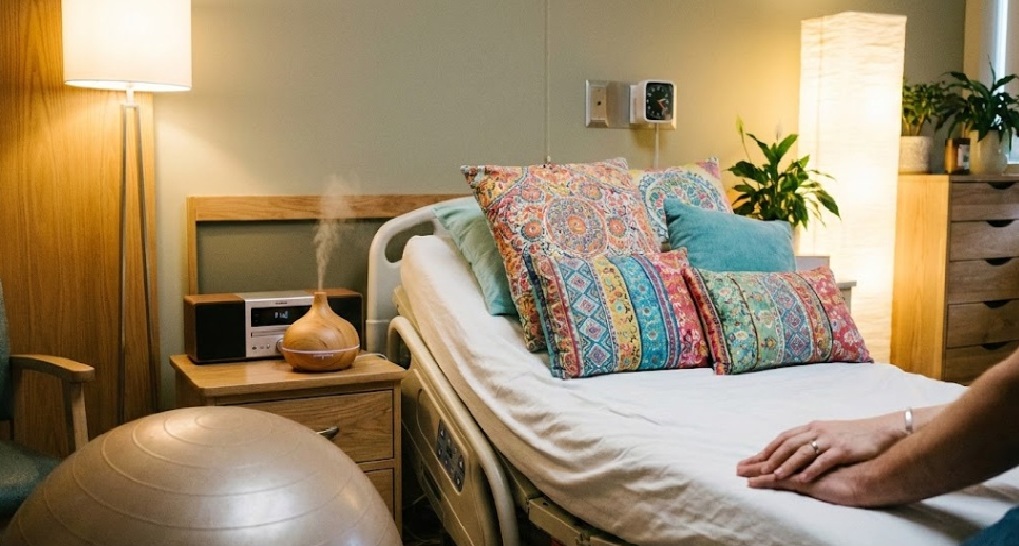
Use a Small Lamp: Consider bringing a small bedside lamp with a low-wattage bulb. This gives you control over your immediate lighting without relying on overhead fixtures.
String Lights: Some hospitals allow battery-operated string lights, which can transform a clinical room into a more intimate space.
Sound and Music for Labor
The sounds in your birthing environment can significantly affect your stress levels and ability to focus during contractions.
Create a Labor Playlist: Before your due date, curate a playlist of music that makes you feel calm, powerful, or joyful. Include a variety of tempos and styles—some women prefer soft, meditative music while others find rhythmic beats helpful during contractions.
White Noise or Nature Sounds: Apps or small speakers that play rainfall, ocean waves, or white noise can help mask hospital sounds like beeping monitors or hallway conversations.
Silence is Golden: Remember that you don’t need constant sound. Some women prefer complete quiet to focus inward during labor.
Partner’s Voice: Your birth partner’s voice can be the most soothing sound. Discuss in advance what kind of verbal support you’ll want—gentle encouragement, breathing reminders, or perhaps just quiet presence.
Aromatherapy for Birth
Many hospitals now permit essential oil diffusers or aromatherapy, though you should always check your facility’s policies first. Certain scents can promote relaxation and reduce nausea:
Lavender: Known for its calming properties, lavender can help reduce anxiety and promote relaxation between contractions.
Peppermint: This refreshing scent can help with nausea and provide an energy boost during long labors.
Citrus Scents: Lemon or orange can uplift mood and create a fresh, clean-smelling environment.
Application Methods: Beyond diffusers, you can use essential oil-infused cotton balls, aromatherapy roll-ons, or even a few drops on your pillow or hospital gown.
Safety First: Always use pure, therapeutic-grade essential oils and avoid applying them directly to skin without a carrier oil. Inform your medical team if you’re using aromatherapy.
Physical Comfort Elements
Pillows: Hospital pillows are notoriously thin and uncomfortable. Bring pillows from home—enough to support you in various positions. Consider a pregnancy pillow if you’ve been using one.
Comfortable Clothing: While many hospitals provide gowns, you may feel more comfortable in your own nightgown or loose clothing. Choose fabrics that are soft, breathable, and easy to move in.
Birthing Ball: These large exercise balls allow you to rock, bounce, and find comfortable positions during labor. Many hospitals provide them, but you can bring your own if preferred.
Massage Tools: Pack a tennis ball or massage roller for counter-pressure during back labor, along with massage oil or lotion.
Temperature Control: Labor can make you feel hot and cold in waves. Bring both a fan and warm socks or a robe. A cool washcloth for your forehead can be incredibly refreshing.
Visual Elements for Focus
Focal Point: Many childbirth classes recommend choosing a focal point to concentrate on during contractions. This could be a photo of a loved one, a meaningful object, a piece of art, or even a specific spot on the wall.
Vision Board: Some women create small vision boards with empowering words, favorite quotes, or images that make them feel strong and capable.
Photos: Pictures of family, your partner, or even your baby’s ultrasound images can provide motivation and remind you why you’re doing this incredible work.
Managing Visitors and Support
Your birth environment includes the people in it. Be thoughtful about who you want present during labor:
Birth Team: Clearly communicate to family and friends who you want in the delivery room and during which phases of labor.
Do Not Disturb: Consider putting a sign on your door asking staff to knock before entering or indicating when you’d prefer not to be interrupted.
Support Person Roles: Brief your support people on their specific roles—who will provide physical support, who will handle communication with medical staff, who will take photos, etc.
Technology Considerations
Phone Settings: Turn phones to silent and consider using “Do Not Disturb” mode to minimize distractions.
Camera Ready: If you want birth photos or video, designate someone specific for this task and ensure devices are fully charged.
Apps: Labor timing apps can be helpful early on, but don’t feel obligated to track everything. Focus on being present in the moment.
Preparing for Unexpected Changes
No matter how much you plan, birth is unpredictable. Your environment might need to change if:
- You need medical interventions
- You transfer to an operating room for cesarean birth
- Labor progresses faster or slower than expected
Stay Flexible: The most important element of your birth environment is your mental space. Even if external circumstances change, you can maintain an internal sense of calm and focus.
Core Comforts: Identify 2-3 elements that matter most to you (perhaps your partner’s presence, music, and dim lighting) and prioritize making those happen regardless of circumstances.
Hospital-Specific Considerations
If you’re giving birth in a hospital, take these additional steps:
Tour in Advance: Visit your birthing facility before your due date to see the rooms and understand what’s available and what restrictions exist.
Ask About Policies: Inquire about rules regarding food, drink, photography, number of support people allowed, and use of personal items.
Communicate Your Preferences: Include your environmental preferences in your birth plan and discuss them with your healthcare provider in advance.
Creating Your Birth Environment Checklist
Pack a small bag specifically for environmental comfort items:
- Battery-operated candles or string lights
- Essential oils and diffuser (if allowed)
- Bluetooth speaker for music
- Multiple pillows in coordinating pillowcases
- Your own comfortable clothing
- Massage tools and oils
- Photos or visual focal points
- Snacks and drinks for your support team
- Extra phone chargers
- Any other personal comfort items
Final Thoughts
Remember, the goal of creating a positive birth environment isn’t to have Pinterest-perfect aesthetics—it’s to create a space where you feel safe, supported, and empowered. Every woman’s ideal environment is different. Some want a quiet, dimly lit space while others prefer upbeat music and bright lights. Trust your instincts about what will make you most comfortable.
Your baby’s birth is a momentous occasion, and you deserve to experience it in an environment that honors this incredible transition. By thoughtfully preparing your birthing space, you’re giving yourself the gift of comfort and control during one of life’s most powerful moments.
Sources:
- American College of Obstetricians and Gynecologists (ACOG)
- Mayo Clinic Birth & Labor Guidelines
- Journal of Perinatal Education: Environmental Effects on Labor